
Was Ram Setu Man-Made? Scientific Research (2026)
NASA satellite findings, geological studies, and what modern research actually says about Adam's Bridge.
Quick Answer
Ram Setu is a chain of limestone shoals between Rameswaram and Sri Lanka. Scientific studies suggest it is a natural formation shaped by sandbanks and coral reefs. However, its alignment and ancient references in the Ramayana fuel ongoing debate about whether it had human intervention.
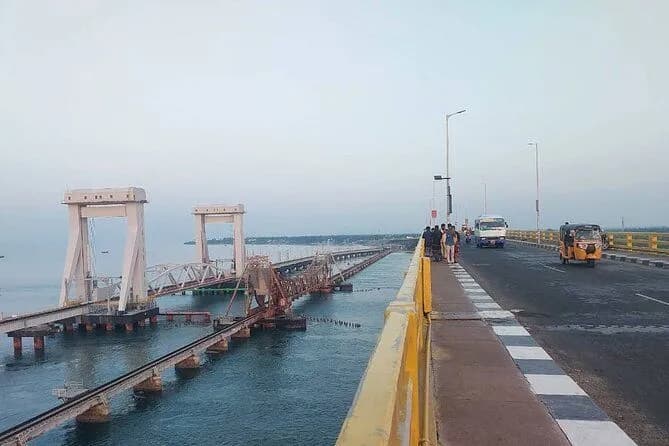
Was Ram Setu man-made? This question has fascinated devotees, researchers, historians, and travelers visiting Rameswaram for decades. If you are planning a pilgrimage to Ramanathaswamy Temple in 2026 and want to understand the truth behind Ram Setu — also known as Adam's Bridge — this detailed scientific and travel guide is for you.
This guide provides scientific findings, satellite evidence, geological insights, local temple connections, and practical 2026 travel information — so you can make an informed visit while experiencing the spiritual power of Rameswaram.
What Is Ram Setu?
Ram Setu, also called Adam's Bridge, is a 48-kilometer chain of shoals stretching from Rameswaram (Tamil Nadu, India) to Mannar Island (Sri Lanka).
According to the Ramayana, Lord Rama built the bridge with the help of the Vanara army to reach Lanka. Today, the visible remains are shallow sandbanks and limestone formations, best viewed near Dhanushkodi.
Scientific Research on Ram Setu
1. Satellite Imagery Findings
Satellite images released by NASA in the early 2000s showed a clear chain-like formation between India and Sri Lanka. NASA clarified that the images only show a natural geological formation and do not confirm human construction.
- Limestone shoals
- Sandbanks
- Coral reef structures
- Shallow water alignment
2. Geological Studies
Geologists believe Ram Setu formed due to sediment deposition, coral growth over centuries, changing sea levels, and natural land bridge evolution during ancient times. Carbon dating of the sand layer and underlying coral structures shows differing ages, keeping the debate alive.
3. Archaeological Perspective
So far, no man-made tools have been discovered underwater, no confirmed structural engineering evidence exists, and there is no continuous stone-laying pattern like ancient bridges. However, the linear alignment remains a mystery.
Spiritual & Cultural Significance in Rameswaram
For pilgrims, the debate is secondary — the faith connection is primary. Before building the bridge, Lord Rama is believed to have performed prayers at Agni Theertham and later worshipped Lord Shiva inside Ramanathaswamy Temple.
- Take a holy dip at Agni Theertham
- Perform the 22 Theertham bath inside the temple
- Book special puja in Rameswaram
- Visit Dhanushkodi as the symbolic Ram Setu endpoint
Is Ram Setu Man-Made? Scientific vs Belief Comparison
- Scientific view: natural limestone shoals, coral reef growth, sediment deposition, no confirmed artifacts
- Spiritual view: built by Lord Rama, Vanara army construction, divine engineering, sacred Ramayana reference
Conclusion: scientifically, it is classified as a natural formation. Spiritually, it remains one of Hinduism's most sacred symbols.
How to Visit Ram Setu in 2026
- Nearest railway station: Rameswaram (2 km from temple)
- Madurai Airport: ~170 km
- Distance from temple to Dhanushkodi viewpoint: ~20 km (30–40 minutes)
Best time: sunrise (less heat) — avoid peak noon (very hot, windy). You cannot walk to Sri Lanka, but you can see the shallow formation area.
Best Time to Explore the Ram Setu Area
- October – February: pleasant weather, moderate crowd — best season
- March – June: extremely hot (35–40°C), visit early morning
- July – September: windy, rough sea conditions — check local updates
Frequently Asked Questions
Was Ram Setu Man-Made? Scientific Research (2026) FAQs
Plan Your Rameswaram Journey
Whether Ram Setu is man-made or natural, its spiritual and cultural significance remains unmatched. A visit to Rameswaram is incomplete without understanding the science, mythology, and local experience connected to this sacred formation.
MyRameswaramTrip provides trusted local assistance for darshan support, puja booking, 22 Theertham guidance, Agni Theertham rituals, Dhanushkodi travel planning, and stay arrangements near the temple.