
Ramanathaswamy Temple
History & Architecture
Centuries of devotion, royal patronage, and Dravidian craftsmanship — uncovered for your 2026 pilgrimage.
Quick Answer — Featured Snippet
Ramanathaswamy Temple in Rameswaram is one of the 12 Jyotirlinga temples dedicated to Lord Shiva. Built and expanded between the 12th and 17th centuries by Pandya and Sethupathi rulers, it is famous for its massive corridors, towering gopurams, 1,200+ intricate stone pillars, and sacred 22 Theerthams — all hallmarks of outstanding Dravidian architecture.
Introduction
Where Devotion Meets Architectural Mastery
The Ramanathaswamy Temple History & Architecture reflects centuries of devotion, royal patronage, and sacred tradition in Rameswaram. If you are planning a pilgrimage in 2026, understanding the temple's origins, architectural brilliance, and Jyotirlinga significance will deepen your spiritual experience.
Located on Pamban Island, the sacred Ramanathaswamy Temple is one of the 12 Jyotirlingas of Lord Shiva and an important part of the Char Dham Yatra. Devotees from across India visit for darshan, 22 Theertham rituals, and ancestral ceremonies. But beyond its rituals, the temple stands as a masterpiece of Dravidian architecture — featuring the longest temple corridor in the world and towering gopurams that reflect South India's rich heritage.
This guide is specially crafted for pilgrims, history lovers, architecture enthusiasts, and first-time visitors who want a complete, accurate, and locally informed understanding of this magnificent heritage monument.
Stone Pillars
Intricately hand-carved
Longest Corridor
World record holder
Earliest Structure
Pandya dynasty era
Jyotirlinga
One of the holiest Shiva shrines
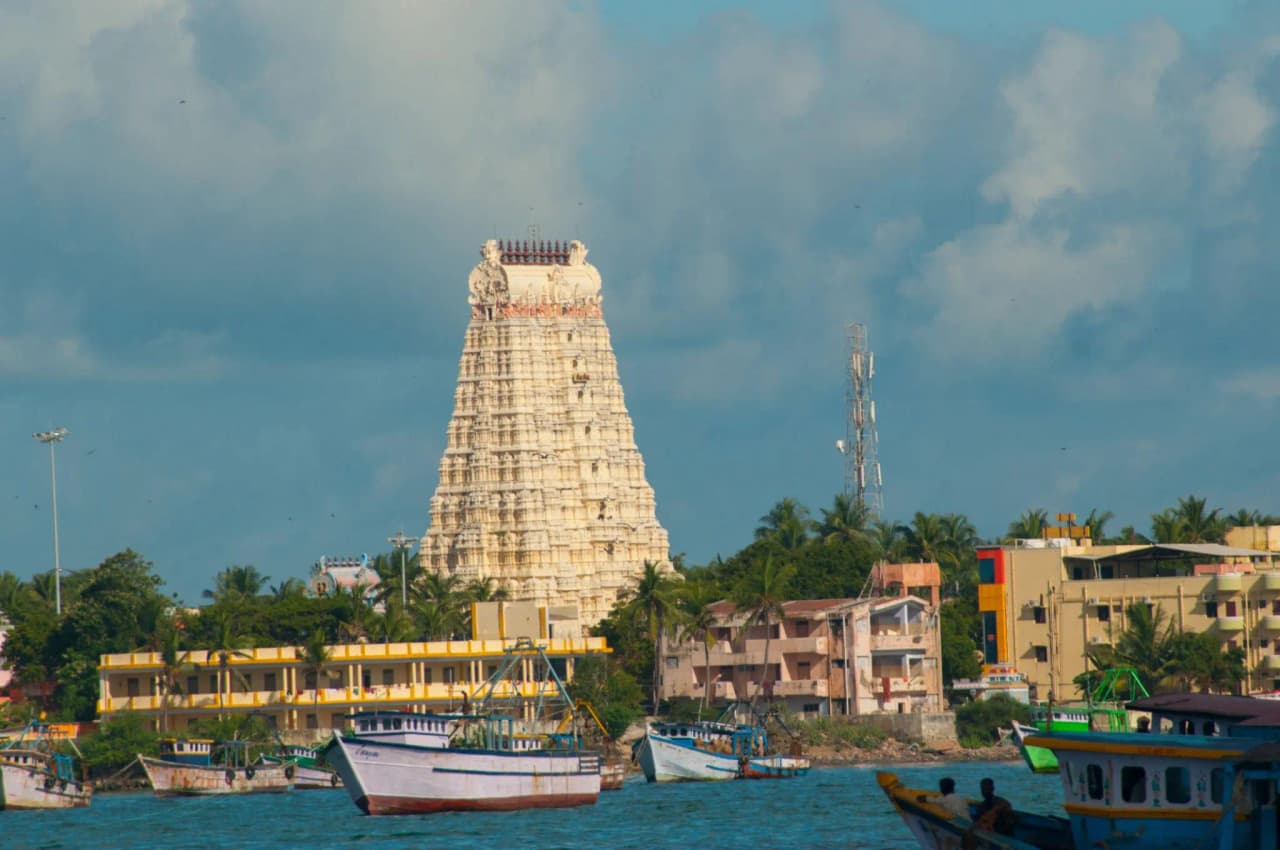
Ramanathaswamy Temple, Rameswaram — Pamban Island
Historical Origins
The Story Behind the Temple
Lord Rama's Sacred Worship at Rameswaram
According to Hindu tradition, Lord Rama worshipped Lord Shiva at Rameswaram after defeating Ravana in Lanka. It is believed that Rama installed a Shiva Lingam here to seek forgiveness for killing Ravana — who, despite being a demon king, was also a learned Brahmin.
This mythological foundation gives the temple immense religious significance and connects it deeply to the Ramayana — making Rameswaram one of the holiest destinations in Hindu pilgrimage tradition.
Early Construction & Expansion
Historical records suggest the temple's earliest structure dates back to the 12th century under the Pandya dynasty. Over the following centuries, it evolved into the grand structure seen today under successive rulers.
Earliest recorded temple structure established under Pandya rulers on Pamban Island.
Major expansions including corridor construction and gopuram development under Sethupathi kings of Ramanathapuram.
Further structural additions including mandapam constructions and pillar corridor extensions.
Modern conservation, pillar restoration, and structural preservation under the Hindu Religious and Charitable Endowments Department.
Architectural Brilliance
Dravidian Architecture at Its Finest
The temple is an outstanding example of Dravidian architecture — a tradition rooted in South India's ancient building heritage. Every element, from the soaring gopurams to the expansive corridors, reveals a mastery of stone and space rarely seen elsewhere.
The World-Famous Corridors
The temple is globally renowned for having the longest temple corridor in the world. Stretching for approximately one kilometre, the outer corridor alone houses over 1,200 massive stone pillars.
- Approximately 1,200+ massive granite stone pillars
- Symmetrical alignment along the full corridor length
- Intricate hand-carved decorative motifs on every pillar
- Walking through them creates a profound sense of divine grandeur
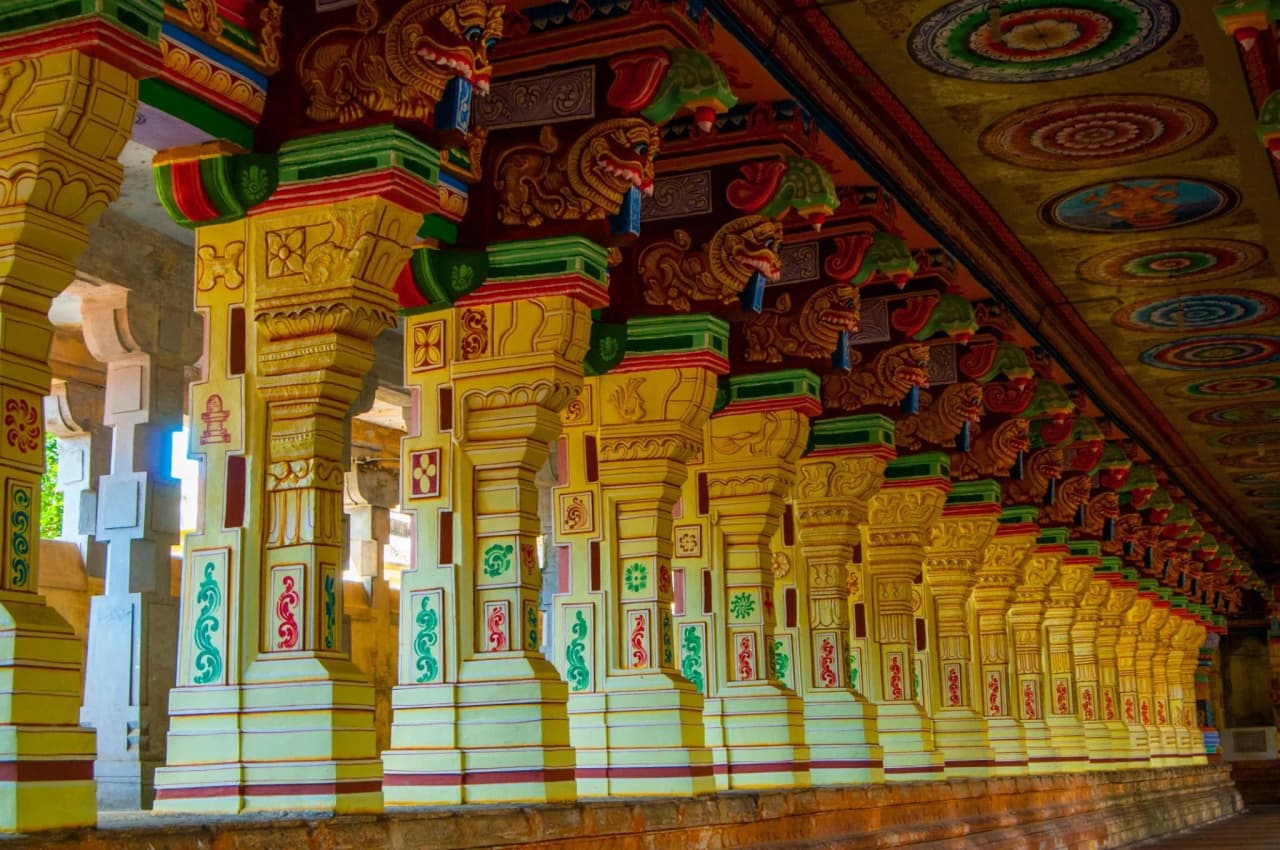
The iconic temple corridor — longest in the world
Majestic Gopurams
The temple features towering entrance gateways known as gopurams, with the eastern Rajagopuram standing as a defining landmark over the Rameswaram town skyline.
- Eastern Rajagopuram visible from across the island
- Traditional South Indian tiered gateway architecture
- Detailed mythological carvings layered across every tier
- Strong granite foundations built to endure centuries
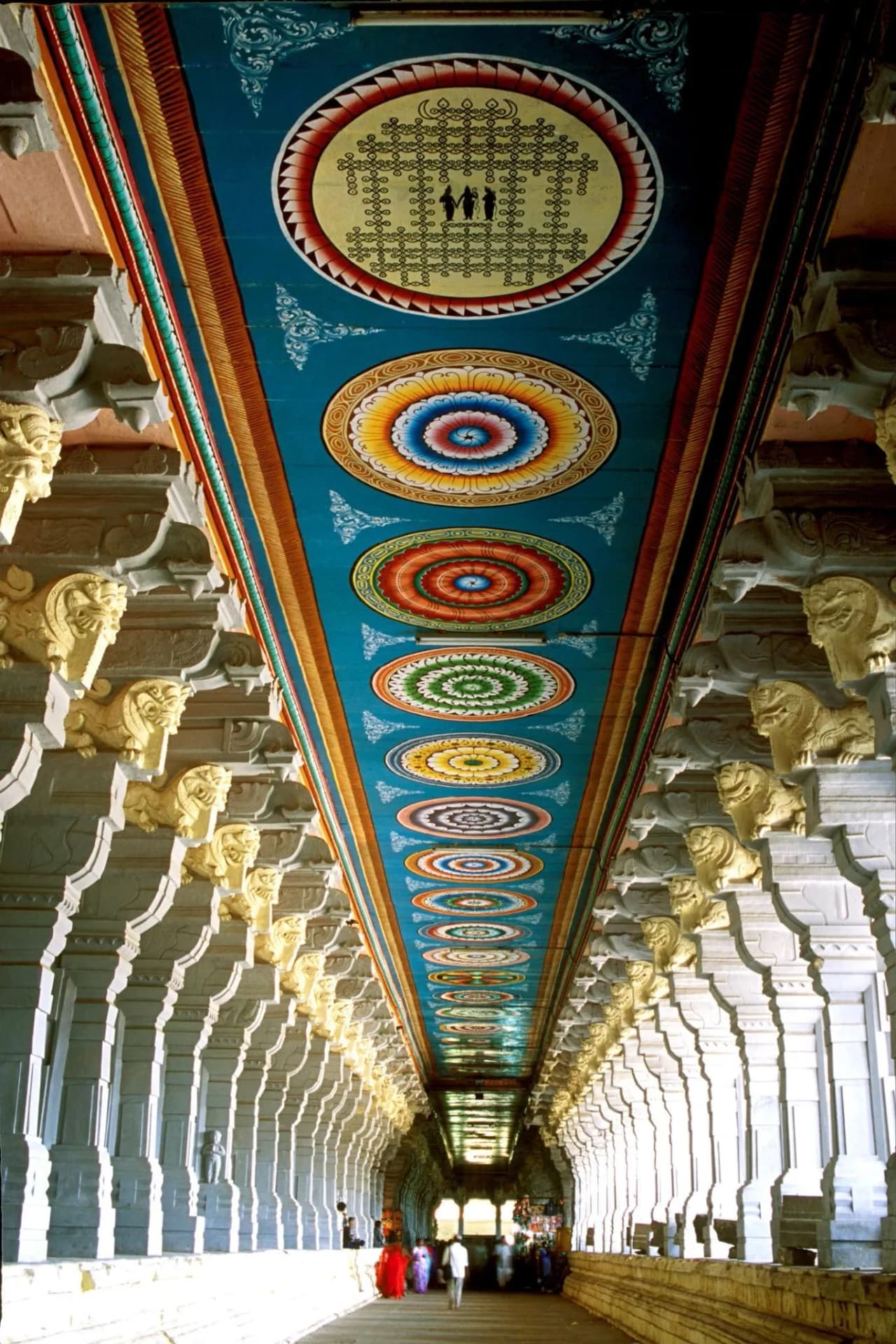
Towering gopuram — a symbol of Dravidian grandeur
Intricate Pillar Sculptures
Each pillar inside the corridor is uniquely carved — no two pillars look identical. The precision and artistry of these sculptures was achieved without modern tools, demonstrating the extraordinary mastery of ancient Indian craftsmen.
- Floral and geometric patterns running the full height
- Deity sculptures and mythological motifs on every pillar
- No two pillars are carved with the exact same design
- Crafted entirely by hand using primitive chisels and stone tools
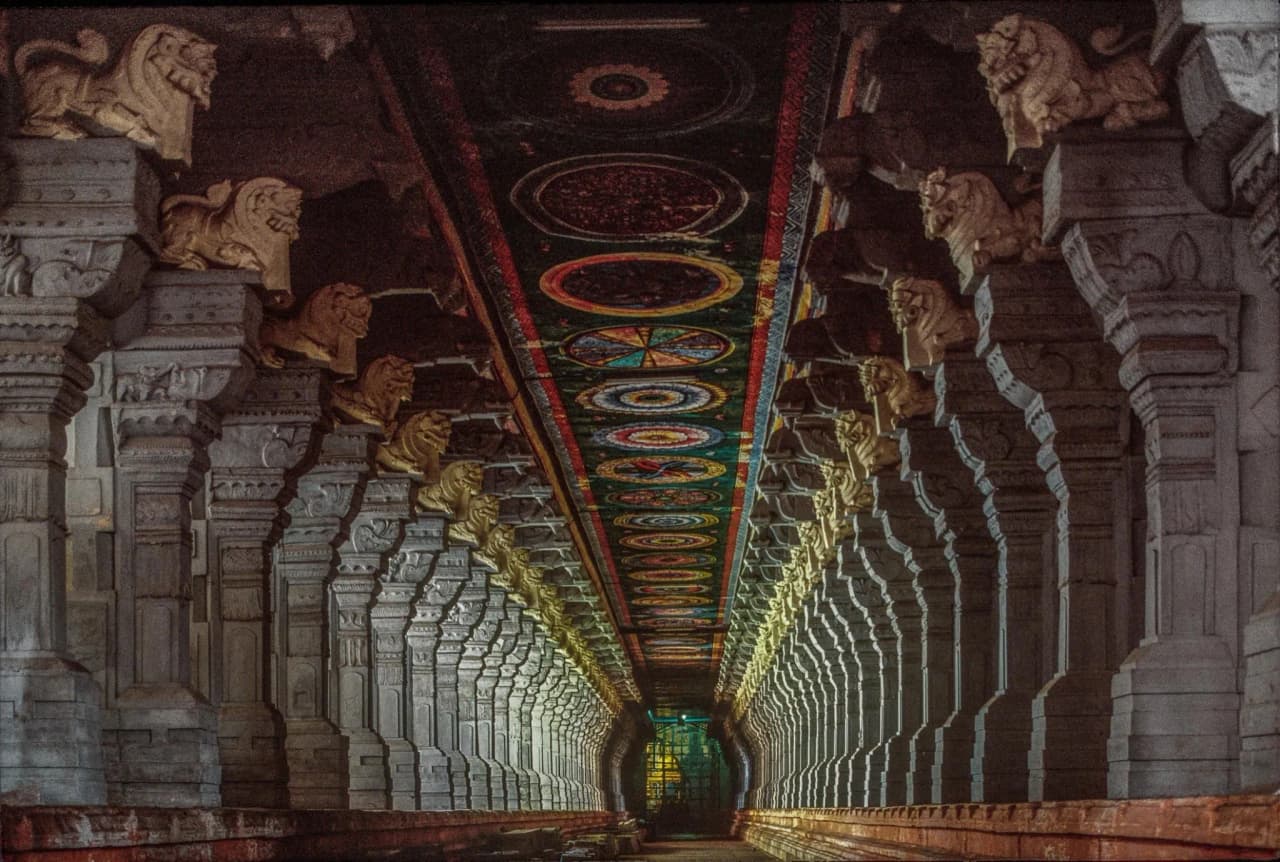
Each pillar is a unique stone masterpiece
Sacred Space
Spiritual Layout of the Temple
The temple's layout follows the sacred principles of Agama Shastra — the ancient Hindu architectural science. Every zone within the temple is structured to guide devotees through an ascending scale of spiritual energy as they approach the Jyotirlinga.
Central Sanctum
Houses the sacred Ramanathaswamy Jyotirlinga — the primary deity installed here by Lord Rama himself according to tradition.
Parvathavardhini Amman Shrine
A separate shrine dedicated to the goddess Parvathavardhini Amman within the temple complex.
22 Sacred Theerthams
Twenty-two sacred holy wells distributed across the corridors, each believed to hold divinely blessed water with distinct spiritual properties.
Ritual Mandapams
Multiple open and enclosed mandapam halls used for daily rituals, festivals, and special pujas throughout the year.
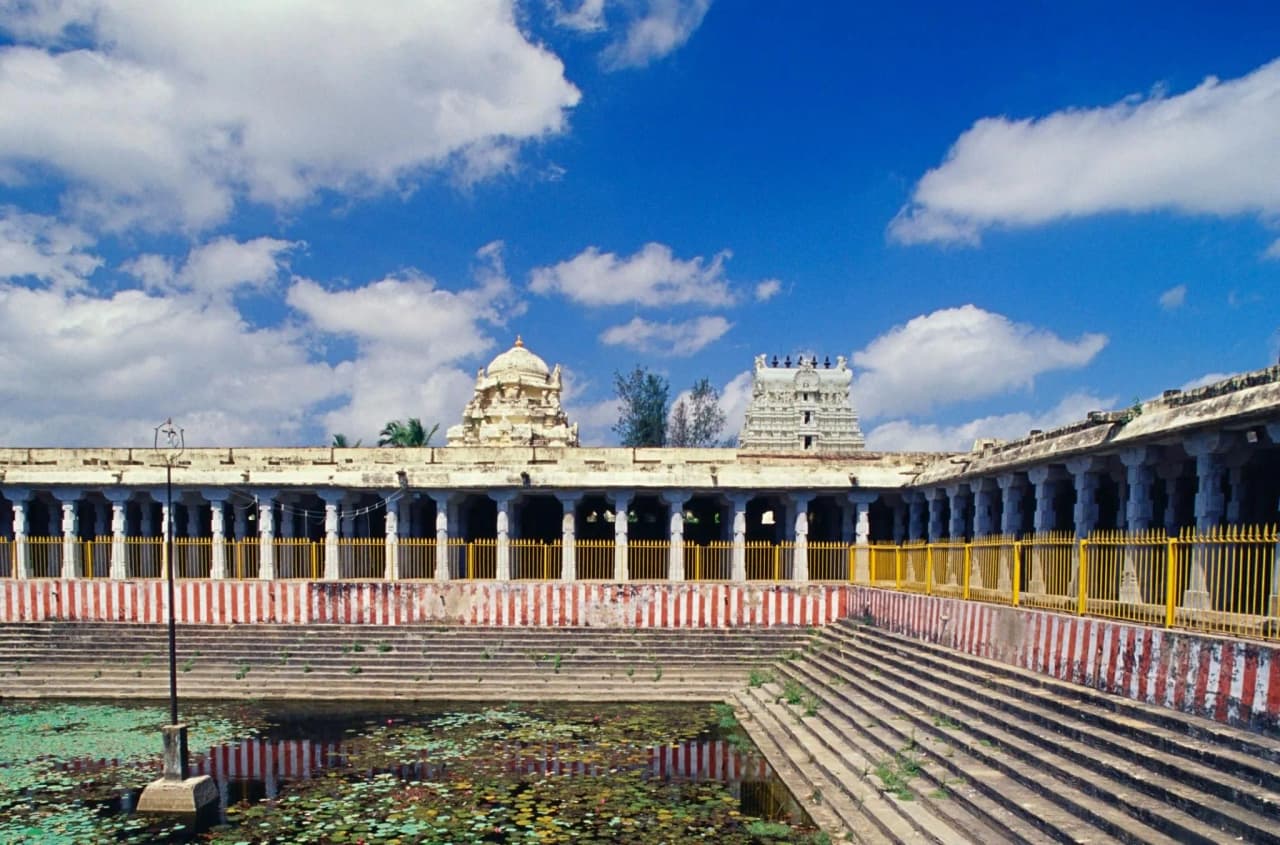
Sacred tank — part of the spiritual layout
Divine Significance
One of the 12 Sacred Jyotirlingas
Ramanathaswamy Temple holds the supreme spiritual designation of being one of the 12 Jyotirlingas — divine manifestations of Lord Shiva's infinite luminous presence scattered across the Indian subcontinent. Pilgrims who complete darshan here earn merit equivalent to visiting all 12.
Agni Theertham Sea Bath
Ritual purification at the Bay of Bengal before darshan
22 Theertham Ritual
Sacred dip in all 22 holy wells inside the corridor
Jyotirlinga Darshan
Seeking divine blessings at the sanctum sanctorum
Preservation
Temple Renovations & Heritage Conservation
Over centuries, successive renovations have maintained the structural integrity and artistic beauty of this heritage monument. Temple authorities and the Tamil Nadu government continue active conservation efforts to preserve this irreplaceable treasure for future generations.
Pillar Restoration
Cracked or worn stone pillars are carefully restored using traditional techniques to preserve the original artistic character.
Structural Strengthening
Foundation and wall reinforcement work is periodically undertaken to protect the structure from sea air corrosion and natural wear.
Carving Preservation
Specialized conservation teams document and preserve intricate carvings that are at risk of fading or degrading over time.
Note: Ramanathaswamy Temple is protected under the Archaeological Survey of India and the Tamil Nadu Hindu Religious and Charitable Endowments Department, ensuring professional oversight of all conservation work.
Visitor Advice
Best Time to Experience the Architecture
To truly appreciate the architectural grandeur — the soaring gopurams, the pillar symmetry, the corridor scale — your timing and approach matter as much as the visit itself.
Visit Early Morning
Soft light, fewer pilgrims, peaceful corridors
Walk the Full Corridor
Don't rush — observe the symmetry from center axis
Look Up at the Pillars
Carvings run from base to capital — study each one
Avoid Peak Rush Hours
Weekends and festival days limit peaceful observation
Local insight: Festival days like Maha Shivaratri bring enormous crowds, which can reduce the opportunity for detailed architectural observation. Plan a weekday visit during October–February for the best combination of weather and manageable crowd levels.
Around Rameswaram
Nearby Historical & Spiritual Attractions
After exploring the temple's magnificent architecture, enrich your Rameswaram experience by visiting these historically and spiritually significant sites nearby.

Pamban Bridge — India's first sea bridge, Rameswaram
Dhanushkodi
Ram Setu ViewpointThe ghost town at the southern tip of Pamban Island — Ram Setu viewpoint and pristine beaches. A deeply moving Ramayana-connected landscape.
Pamban Bridge
Engineering MarvelIndia's first sea bridge and an iconic engineering marvel — a rail and road crossing over the Bay of Bengal with stunning views.
Kothandaramaswamy Temple
Ramayana HeritageA rare Ramayana-linked coastal temple where Vibheeshana surrendered to Lord Rama — one of the most historically significant spots in Rameswaram.
Cultural Identity
Cultural Importance in Tamil Nadu
Ramanathaswamy Temple is far more than a pilgrimage center — it is a defining cultural symbol of Tamil Nadu's heritage, spirituality, and architectural identity that resonates across India and among Hindu communities worldwide.
Tamil Spiritual Heritage
A symbol of Tamil devotion and craftsmanship cherished for centuries
Major Pilgrimage Centre
One of the most visited Shiva temples in all of South India
Architectural Treasure
Globally recognized as an outstanding example of Dravidian architecture
Local Insight
Practical Travel Tips
From on-ground experience in Rameswaram — tips that guidebooks rarely mention.
Visit early morning for better light and far fewer crowds
Walk slowly through the corridors — observe the symmetry from the center axis
Photography is restricted inside corridors — appreciate with your eyes and memory
Avoid peak rush hours on weekends and festival days for a peaceful experience
Hire only authorized guides if temple context is needed
Temple floor can be slippery after ritual water — walk carefully
Tip from Rameswaram locals: If you are traveling from Madurai, plan an overnight stay in Rameswaram. Rushing the temple visit in a day-trip often means missing the quiet early morning corridors — which are the most architecturally breathtaking.
Frequently Asked Questions
Temple History & Architecture FAQs
Experience History, Devotion &
Architectural Grandeur
The Ramanathaswamy Temple History & Architecture reveals not just a place of worship, but a living heritage monument shaped by centuries of devotion and craftsmanship. From its Ramayana connection to its breathtaking 1,200-pillar corridors, every corner reflects spiritual and architectural excellence.
Whether you are visiting to explore its magnificent architecture, experience the sacred Jyotirlinga darshan, perform traditional rituals, or plan a complete spiritual tour — MyRameswaramTrip (myrameswaramtrip.com) is here to guide you at every step. Our experienced local team in Rameswaram provides trusted on-ground support — from darshan assistance and 22 Theertham coordination to temple-guided visits, sightseeing, and comfortable vehicle arrangements.